M&A Series

Naviguer les fusions et acquisitions (F&A)Partie 1 – Aligner les talents, la rémunération et la performance
Une série sur les considérations RH et de rémunération dans le cadre de fusions et acquisitions.Une stratégie RH et de rémunération bien planifiée dès le début du processus est essentielle pour assurer une transition harmonieuse, favoriser la rétention et l’engagement des talents, maintenir la continuité des activités et maximiser la réalisation des synergies.Ce premier article présente les principaux volets RH, aidant les entreprises à naviguer parmi les décisions critiques et à aligner leur stratégie humaine pour assurer une réussite à long terme à chaque étape d’une transaction.
Téléchargez l’article de Laulima ici

Téléchargez l’article de Laulima ici

Navigating M&A
Aligning People, Pay & Performance
First article in a series exploring HR & Compensation in M&A
Following a moderate period of mergers and acquisitions (“M&A”) activity, 2024 saw a 12% increase in global deal value to USD$3.4 trillion¹. There is general sentiment that M&A activity could continue to rise, driven by regulatory loosening and lower interest rates, despite some geopolitical pressures and significant tariff risks.
M&A presents opportunities for growth, expansion, and operational efficiencies. However, they may also bring potential disruptions and considerable challenges in aligning organizational culture, compensation structures and broader HR programs across two distinct organizations. A well-planned HR and compensation strategy early in the process is crucial for a smooth transition, talent retention and engagement, business continuity and synergy realization.
As a human capital advisor, Laulima provides guidance to management teams on critical HR considerations in M&A situations. Below are key HR workstreams to help companies navigate critical decisions and align their people strategies for long-term success during each stage of a transaction.
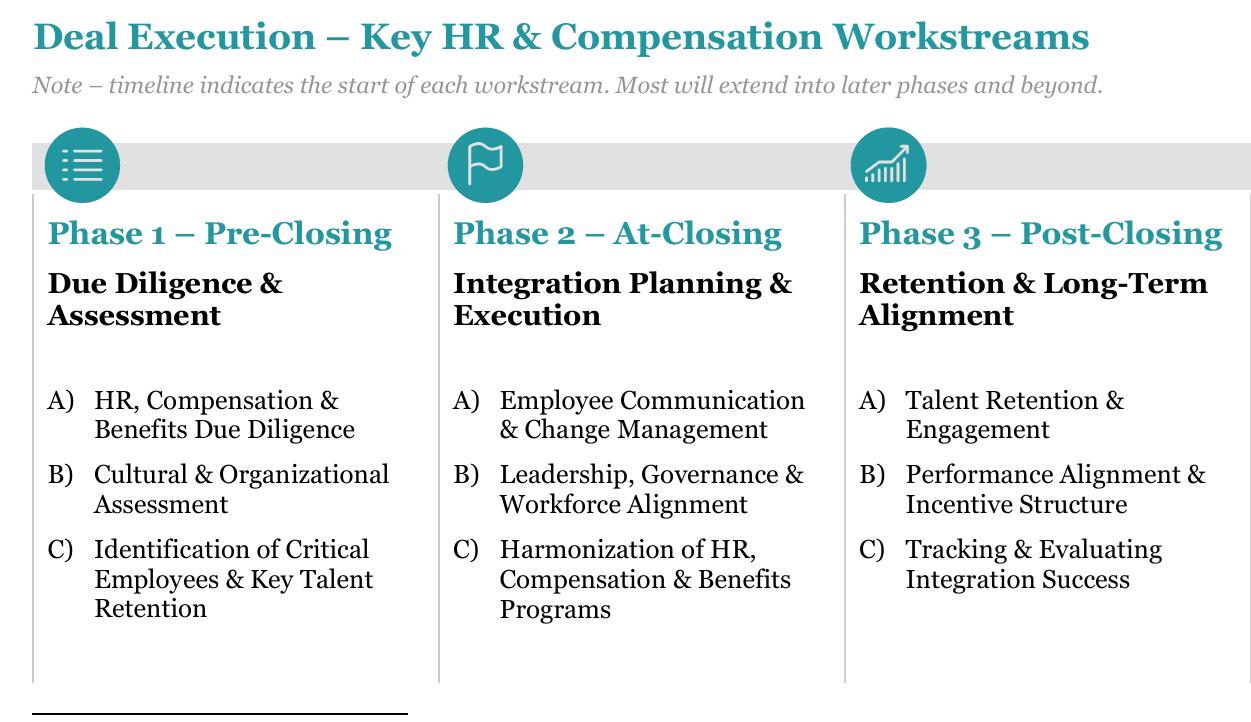
Phase 1 – Pre-Closing: Due Diligence & Assessment
A) HR, Compensation & Benefits Due Diligence
- Assess current compensation structures, benefits plans, contractual obligations and liabilities for both companies.
- Identify red flags and differences in pay structures, short-term incentives (“STI”), sales or other incentives, long-term incentives (“LTI”), retirement plans and benefit / perquisite programs between the merging organizations.
- Evaluate any legal or compliance risks related to pay equity (if applicable), executive compensation, retirement plans, and benefits integration.
- Evaluate employment agreements, change-in-control provisions, and severance entitlements.
B) Cultural & Organizational Assessment
- Analyze cultural compatibility and potential integration challenges between the two companies.
- Identify differences in leadership styles, organizational values and structure and review employee engagement levels at both companies.
- Assess cultural differences across different geographies that each company operates in.
C) Identification of Critical Employees & Key Talent Retention
- Identify key employees critical to drive:
- (A) Execution of the transaction.
- (B) Integration success post-close.
- (C) Long-term business success.
- Determine if a deal bonus is necessary to reward the successful execution of the transaction.
- Assess retention risks and develop targeted retention agreements for the employees identified above, including “pay to stay” arrangements to foster retention and engagement.
Note – This step extends through Phases 2 and 3.
Phase 2 – At Closing: Integration Planning & Execution
A) Employee Communication & Change Management
Note – This step is expected to extend throughout the entire transaction process.
- Develop a transparent and proactive communication plan regarding the transaction to minimize uncertainty and disruption.
- Address employee concerns regarding job security, compensation / benefits changes, and career progression.
- Design and deliver education for managers and employees on new and/or revised programs.
- Provide regular updates and resources to ensure a smooth transition for employees.
B) Leadership, Governance & Workforce Alignment
Note – This step may extend post-closing.
- Define the leadership and organizational framework post-transaction.
- Ensure clear roles and responsibilities, including reporting structure.
- Determine the appropriate HR operating model, go-forward HR systems, processes and policies.
- Start synergy and workforce planning, including workforce optimization.
- Align on governance policies and decision-making processes for management / HR and Board / compensation committee.
C) Harmonization of HR, Compensation & Benefits Programs
Note – This step is expected to extend post-closing.
- Align on a total rewards philosophy for the new organization.
- Analyze pay levels for comparable roles to ensure fairness, equity, consistency, and compliance with applicable legislation.
- Assess the cost impact of the harmonization strategy and identify the best budget-aligned approach.
- Create unified job architecture to consistently articulate job levels and career paths for the new organization.
- Standardize salary structures, incentive programs and align equity and stock-based compensation programs to maintain fairness and competitiveness.
- Determine an optimal approach to integrating benefits and retirement plans, balancing cost constraints, key considerations and legal / regulatory compliance.
Phase 3 – Post-Closing: Retention & Long-Term Alignment
A) Talent Retention & Engagement
Note – This step is a continuation of Phase 1C and extends through Phase 2.
- Implement mid- to long-term retention plans for high-performing and high-potential employees and those critical to integration.
- Conduct pulse surveys to gauge employee sentiment post-merger.
- Harmonize career development and leadership programs to support organizational growth.
B) Performance Alignment & Incentive Structure
Note – This step is a continuation of Phase 2C.
- Re-evaluate and refine performance management systems to align with new organizational goals.
- Adjust incentive programs to reflect new company strategic objectives, including recognizing key integration goals.
- Assess the impact of the transaction on performance metrics and goals, making adjustments as needed.
- Periodically review incentive programs to ensure they continue to motivate and retain top talent, while providing a strong link between pay and performance.
C) Tracking & Evaluating Integration Success
- Continuously assess integration success and refine the structure or approach as needed to optimize outcomes and align objectives.
- Establish HR analytics and reporting to track employee satisfaction and turnover post-transaction.
- Solicit ongoing feedback from employees to ensure an understanding of how well the integration is progressing.
M&A transactions demand a comprehensive approach to compensation and HR strategy to minimize disruption and maximize value. By focusing on due diligence before the transaction, careful integration planning during the deal, and long-term optimization after the merger, organizations can successfully align their people strategy with business objectives, ensuring a smooth transition and an engaged workforce post-merger.
Stay tuned for our next Navigating M&A article. For more information or if you would like to discuss how we can support you in the M&A process, please contact us at info@laulimaconsulting.com.
Lire plus d'articles
VOIR TOUT


.svg)


Dropdown