March 2, 2026

The DEI Pay Equation
This article outlines the three core elements of the DEI pay equation: pay equity, pay transparency, and pay fairness and how they work together to create sustainable and credible compensation practices.
Download article

Download article

Compensation has entered a new era. Employees are talking openly about pay, governments are introducing stricter transparency laws, and organizations are being held to higher standards of accountability than ever before.
In today's workplace, compensation is more than just a number on a paycheque. It signals how organizations value their people, build trust, and foster inclusion. The DEI Pay Equation provides a practical framework for HR and total rewards leaders to ensure compensation practices support your organization's journey towards diversity, equity, and inclusion objectives, while also supporting a robust business case.
This article outlines the three core elements of the DEI pay equation: pay equity, pay transparency, and pay fairness and how they work together to create sustainable and credible compensation practices.
Pay Equity: Equal Pay for Work of Equal Value
Pay equity ensures that employees performing work of equal value are compensated equitably, regardless of gender, ethnicity, or other demographic factors. We see three pillars of pay equity:
- Equity in Structure: Compensation structures including job evaluation methodology, salary ranges, and incentive targets should be designed to provide equal pay opportunities for work of equal value across the organization.
- Equity in Practices: Performance management, salary administration, hiring pay decisions, and incentive outcomes must be clearly defined, documented, and consistently applied without bias.
- Equity in Outcomes: Actual salaries, increases, and incentive payouts must be distributed equitably and based on factors such as performance, demonstrated skills, sustained contribution, and role value.
Why it matters: Pay equity is the foundation of fair pay practices. It is not only a regulatory requirement in many jurisdictions (e.g., Canada's federal pay equity act, provincial regulations in Ontario and Quebec, and in other jurisdictions such as the European Union), but also a business imperative. Organizations that achieve equity build trust and foster a culture of performance.
The business case: pay equity fosters a culture of performance by developing a compensation program where everyone is rewarded equitably for their skills and contributions, where high performers are rewarded for their results, and top talent is attracted and retained, regardless of their background.
Action steps for HR leaders:
- Implement a job evaluation plan to objectively measure the value of work for jobs across your organization.
- Develop a compensation structure grounded in job evaluation and market data to ensure equitable pay opportunities across comparable roles and levels.
- Formalize performance management and audit rating distributions, ensuring ratings are applied fairly and consistently.
- Develop pay-for-performance guidelines that create clear and objective linkages between performance results, salary increases, and incentive payouts.
- Analyze employees' base salaries, merit increases, and incentive payouts across demographic groups to ensure equitable outcomes.
- Ensure that you are compliant with pay equity regulations, if they apply to you.
Pay Transparency: Sharing More Information on Pay and Policies
Pay transparency is about being open about how pay is determined, including publishing salary ranges, reporting pay gaps, and equipping leaders to have honest conversations about compensation.
Pay transparency requirements are increasing globally, driven by both legislation and shifting employee expectations. New and expanding laws include the European Union's Pay Transparency Directive, which will introduce mandatory pay range disclosure, enhance employee rights to pay information, and expand reporting obligations across EU member states. Together, these changes reflect a broader cultural shift towards openness and accountability in compensation.
Why it matters: pay transparency isn't just a concept confined to regulations and textbooks – it is simply today's workplace reality.
- 86% of Gen Z employees openly discuss salaries.1
- 79% of jobseekers are more likely to apply to postings with salary ranges.2
- 52% of all employees discuss salaries with their co-workers – meaning that employees already share pay information, whether legislation exists or not.3
The business case: greater transparency helps organizations attract, retain, and engage top talent by building trust with employees and candidates through open and honest conversations about their pay and career opportunities. Increased transparency helps strengthen an employer's credibility and reputation, support equitable decision-making, identify and close pay gaps, and position your organization as an employer of choice.
Action steps for HR leaders:
- Conduct a compensation benchmarking review to ensure that you are paying competitively with your market for talent.
- Develop job levels and a market-competitive and equitable salary structure as the foundation to support greater pay transparency.
- Create education, FAQs, and manager guides to prepare leaders to answer questions from employees about how pay decisions are made.
A common misstep to avoid: Some organizations move toward transparency by publishing salary ranges or communicating pay policies before addressing underlying inequities. When that happens, transparency can unintentionally expose inconsistencies, create confusion, and erode trust. Transparency works best when it is built on a foundation of equity.
Pay Fairness: The Cultural Outcome
Pay fairness is the perception that compensation reflects the job's requirements, qualifications, contributions, market value, and performance – not personal characteristics or biases. Unlike equity (which is measurable) and transparency (which is a practice), fairness is about how employees feel about their pay.
Why it matters: Employees who believe they are paid fairly are more motivated, less likely to disengage, and more focused on performance rather than questioning compensation outcomes or leadership intent. Fairness is where compensation becomes culture.
Action steps for HR leaders:
- Start with your compensation infrastructure. How are you measuring the value of work? Is your structure equitable and consistent? Do you have the data that you need to get started (e.g. gender, ethnicity, sexual orientation, etc.)?
- Run an audit to see how you're doing. Consider measuring the salaries and distribution of performance ratings, merit increases, and bonuses by demographic group.
- Run performance calibration sessions. Facilitate cross-functional performance rating calibration sessions to ensure that performance decisions are consistent and unbiased across the organization.
- Increase transparency. Determine the level of transparency you are comfortable with and what you can share.
- Develop a communication plan. Education and leader communications are key. Be ready to explain how compensation decisions are made, how employees can move up in the range, and what it takes to get to the next level.
- Understand your regulatory obligations. Your pay fairness strategy may be influenced by specific requirements in global jurisdictions.
The DEI Pay Equation
We see the DEI pay equation as: Pay Equity + Pay Transparency = Pay Fairness.
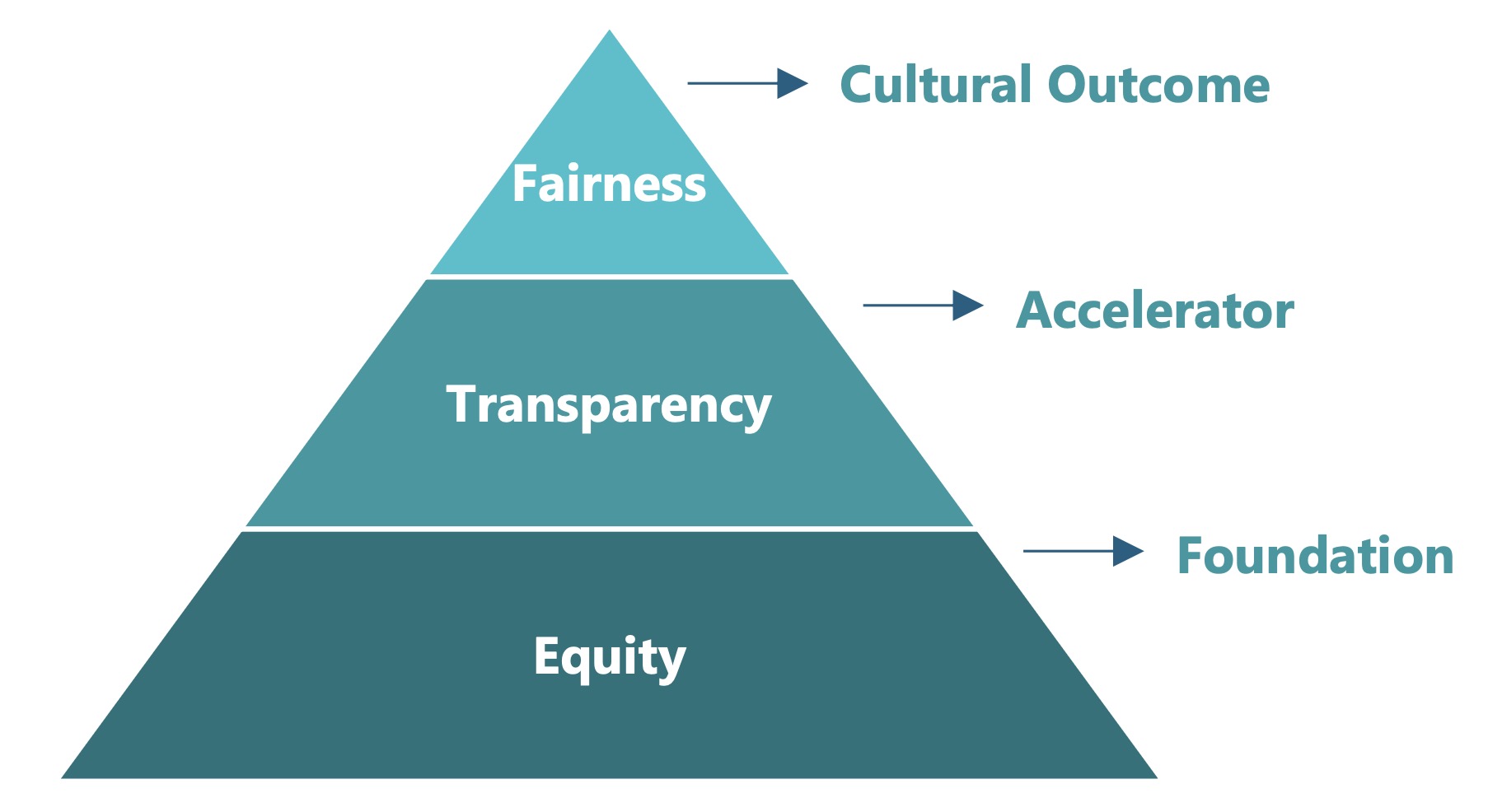
We can think of this as a progression:
- Equity is the foundation – without equitable structures and outcomes, transparency and fairness cannot exist.
- Transparency is the accelerator – openness drives accountability and trust.
- Fairness is the cultural outcome – when equity and transparency are in place, employees perceive pay as fair, driving engagement and performance.
For HR and total rewards leaders, the DEI Pay Equation is not simply a compliance exercise – it's a strategic lever. Organizations that embed equity, transparency, and fairness into compensation practices, are better positioned to build cultures of trust, attract diverse talent, and retain top performers.
The future of compensation is not secrecy or opacity; it's clarity, openness, accountability, and fairness. In an era where employees can see, share, and question pay like never before, the organizations that embrace this equation will be the ones that thrive in the evolving world of work.
To talk about your organization's strategy to pay equity, pay transparency, and pay fairness, contact us at info@laulimaconsulting.com.
1 Survey shows shift in salary transparency attitudes among younger employees | Benefits and Pensions Monitor
2 The Rising Power of Pay Transparency | WorldatWork
3 Survey shows shift in salary transparency attitudes among younger employees | Benefits and Pensions Monitor
Read more articles
SEE ALL





.svg)


Dropdown